Analysis & Modelling
(Remote Sensing)
Instructors: Prof. Stefan Lang, Prof. Dirk Tiede, Hannah Lucille Augustin, Zahra Dabiri
Detection of algal blooms in Lake Balaton (Hungary) using Sentinel-3 OLCI satellite data (2019)
Abstract
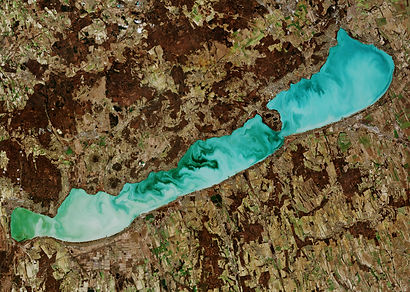
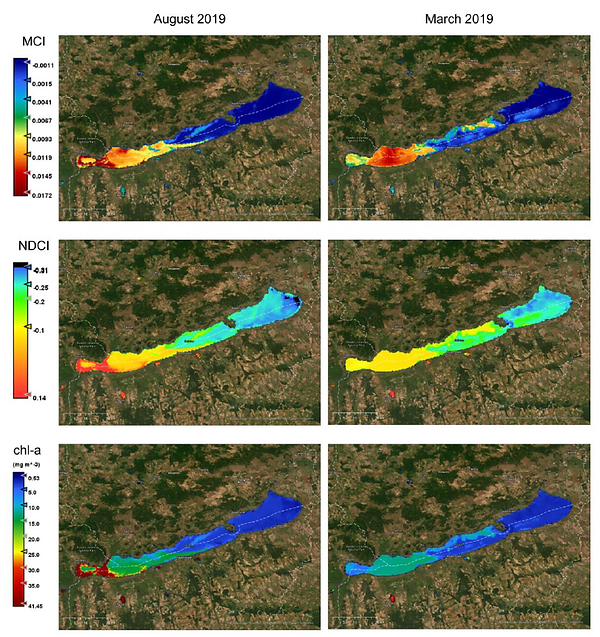
Algal blooms are the excessive growth of algae that occurs in inland waters mainly due to eutrophication and may harm both the ecosystem and the human health (harmful algal blooms). Algae contains chlorophyll, a green pigment which can be detected using optical satellite sensors. This study aims to detect and map an algal bloom that occurred in Lake Balaton (Hungary) during August 2019, using Sentinel-3 OLCI data. Lake Balaton is an optically complex freshwater lake, due to variant concentrations of algae (chl-a), CDOM and Total Suspended Matter (TSM), as well as its low depth. To detect the bloom, the data were atmospherically corrected using the Case 2 Regional CoastColour (C2RCC) processor, available in SNAP software, and the Normalized Water Leaving Reflectances (rhown) were used to calculate the Maximum Chlorophyll Index (MCI) and the Normalized Difference Chlorophyll Index (NDCI). Additionally, the chlorophyll-a concentration product (mg/m3) from the C2RCC was utilized. These indices provide a qualitative indication of algae present in water. The results from August 2019 were compared to March 2019 to investigate the change of algal biomass in the water. Results indicated elevated values for both indices and for the chlorophyll-a concentration product, particularly in the southwestern lake basin during August compared to March 2019. Further investigation of the quality of the results is needed to determine the accuracy of the indices results through comparisons with in-situ concentration measurements. This is necessary since the complex optical characteristics of the lake might impose adaptations of the MCI coefficient used in previous studies and due the challenges of performing accurate atmospheric correction in inland waters. Additionally, monitoring of the lake’s water quality after the 2019 algal bloom event could provide meaningful insights of the lake’s trophic status and possible measures that could be taken.
Methodology

Results